Express Login
 Contact Us
 RMU Login
 Customer Portal
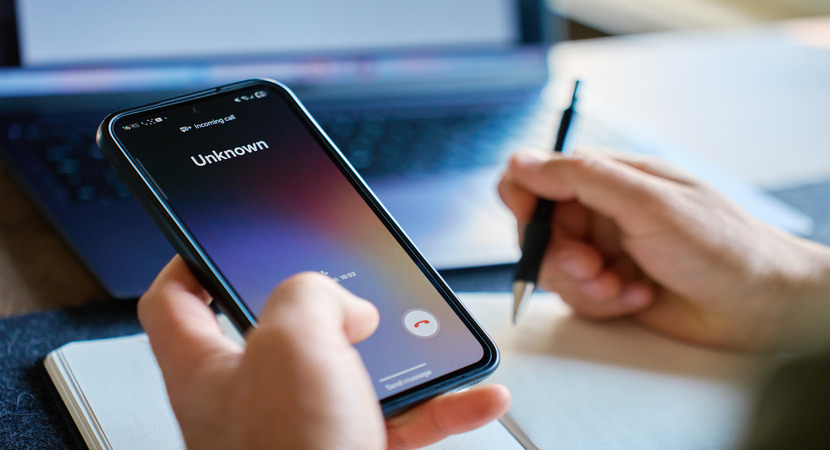
Ask any leasing team what their busiest hour looks like and you will hear a familiar story. A tour is wrapping up, the phone is ringing, a handful of email inquiries are sitting unread, and a text just came in asking whether the two-bedroom is still available. Every one of those touchpoints is a prospective resident, and every one of them is probably reaching out to other communities at the same moment. That last detail is the part property managers cannot afford to overlook; renters rarely inquire at a single property. They shop several at once, and often, the community that answers first is the one that earns the tour, and eventually, the signed lease. Response time has quietly become one of the most important numbers in leasing, and most teams do not measure it at all.
The Market Has Raised the Stakes
Conditions make this more urgent than it was a few years ago. Harvard’s Joint Center for Housing Studies reports that the rental market has softened, with rents on new leases showing modest declines and vacancy rates ticking upward. When vacancies rise, every inquiry carries more weight. Communities are no longer choosing among a surplus of applicants. They are competing for each one.
Renters, meanwhile, have more options at their fingertips than ever. The NMHC and Grace Hill Renter Preferences Survey, the largest study of renter behavior in the industry with more than 172,000 respondents, devotes an entire section to how people search for and tour apartments. That search begins online, happens on the renter’s schedule, and rarely involves just one property.
Where Inquiries Fall Through the Cracks
The gap is rarely about effort. Leasing professionals are stretched across tours, applications, renewals, resident requests, and vendor calls. Inquiries arrive faster than any one person can answer them, and they arrive everywhere at once: web forms, email, phone, text, and listing sites.
A few predictable moments create most of the missed opportunities:
- After hours and weekends. A large share of rental searching happens in the evening and on weekends, precisely when the office is closed. Those inquiries wait until morning, by which point the prospect has moved on.
- Peak leasing season. When volume spikes, response times stretch, and the busiest weeks become the ones where the most leads slip away.
- Channel overload. A prospect who texts and gets no reply will not usually call back. Each unanswered channel is a door left closed.
None of this reflects a team that does not care. It reflects a workload that outpaces the hours in the day.
What Does it Take to Win on Response Time?
Several things must be true at once.
- Every inquiry needs an instant reply, no matter the hour or the channel.
- That reply must do real work rather than simply acknowledge the message: confirm availability, answer the obvious question, and move the prospect toward a scheduled tour.
- One touch isn’t enough—keep following up, since most leases are not won on the first message.
And all of it has to happen without pulling leasing staff away from the residents and tours already in front of them.
For most teams, meeting every one of those conditions by hand is not realistic. The days are already full, inquiries already outnumber the hours, and evenings and weekends fall outside office coverage entirely. That is the gap most communities are living with, and it is the gap Uniti was built to close.
How Uniti Closes the Gap
Uniti gives every community an AI leasing agent that responds the moment an inquiry arrives, at any hour, across voice, email, text, WhatsApp, and website chat. It answers the prospect’s questions, qualifies the lead, and schedules the tour, then hands off to a leasing professional the instant a human touch is needed, with the full conversation history attached so the prospect never has to repeat themselves.
Because Uniti connects directly to Rent Manager, new contacts and conversations sync into the system your team already works in, in real time. There is no double entry and no lost context, and the pipeline keeps moving whether or not the office is open. Teams that bring on Uniti typically cut response times to under 90 seconds and lift lead-to-lease conversions by 20 percent or more, without adding a single person to the payroll. Most communities are up and running in about 30 days.
The Bottom Line
Occupancy is won and lost in the first few minutes after a prospect raises their hand. The research is consistent across industries: the fastest responder holds an enormous advantage, and the slowest one keeps wondering where the leads went. In a softening rental market where every inquiry is harder to earn, that advantage compounds.
Responsiveness does not have to be something a busy team chooses between doing well and doing at all. With the right leasing agent answering every inquiry the moment it arrives, communities capture more of the demand they are already paying to generate, and give every prospect the fast, helpful first impression that earns the lease. Renters remember who answered, and they sign where they felt taken care of first.