Express Login
 Contact Us
 RMU Login
 Customer Portal
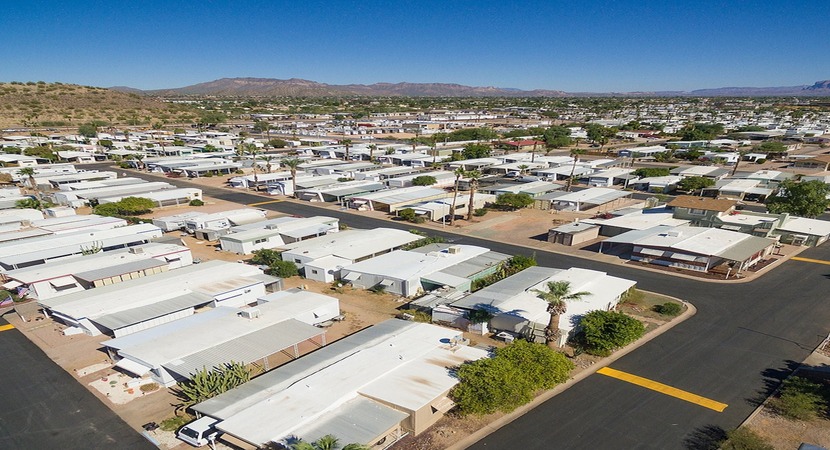
Roots Management Group oversees a vast and growing portfolio of manufactured housing and RV communities—roughly 200 properties, 30,000 sites and counting, spread across 23 states. At that scale, the margin for operational chaos is narrow. Data errors compound. Manual processes break down. And the difference between thriving and surviving often comes down to whether systems can keep pace with ambitions.
For Tyler Brady, VP of Operational Strategy at Roots, the goal has always been straightforward, even when the work isn’t. “Our mission is to provide best-in-class housing options that anyone can afford, and better the lives of not only our residents, but our employees and community managers, too.” Achieving that mission across hundreds of communities required a technology foundation that could hold everything together.
A Patchwork of Systems and the Problems that Come with It
Before Roots standardized on Rent Manager, their operational infrastructure was fragmented. Accounting lived in one system; operations lived in another. Regional managers tracked data independently in spreadsheets that were never quite current. When the time came to report up to the C-suite, it meant emailing spreadsheets, reconciling conflicting figures, and hoping the numbers told a coherent story.
“There were fire drills constantly,” Tyler explains. “Everyone was trying to track things independently, and duplicate manual entries were a major headache. You’d have to put it in this system, then copy and paste the same data into that system. That’s not a problem anymore.”
The inefficiencies were a data integrity problem, not just operational inefficiency. Without a reliable, unified record, Roots couldn’t be confident in the information they used to make decisions.
One System, One Source of Truth
Roots chose Rent Manager after a deliberate software evaluation. The decision came down to value and capability; they were using fewer features than the market offered, and Rent Manager presented both a richer feature set and a more affordable price point. But the deeper reason was simpler: everything could finally live in one place.
“Having it all in one place means everyone can rely on one single source of truth,” Tyler says. “That has been the biggest game changer for us.”
With accounting and operations now unified in Rent Manager, the downstream impact was immediate. Anything logged in the field—a work order, a lease update, a utility reading—flows directly into the accounting system in real time. No lag, no reconciliation headaches, no waiting for yesterday’s reports. “No longer do we have to wait to see what will be,” Tyler notes. “You can see it right then and there.”
The shift also brought a new level of data accountability. Audit trails, timestamps, and user records mean that when something looks off, Roots can trace it quickly, follow up with the right person, and correct it without guesswork.
Built to Fit the Way Roots Works
Manufactured housing is a specialized industry, and Roots operates with a degree of complexity that generic software simply can’t accommodate. Tyler and his team have leaned heavily into Rent Manager’s customization capabilities to build workflows, reporting structures, and User Defined Fields (UDFs) that reflect exactly how Roots operates.
“Rent Manager is able to cater directly to our needs and can grow how we want to grow,” Tyler explains, and especially notes the value of Rent Manager’s reporting options.
“I love being able to custom build reports and see exactly what I need to see at any moment, knowing it’s real live data,” he says. Whether it’s a rent roll, a recurring charges review, or a financial package for an executive review, the answers are there, easily configured and filtered however the situation demands.
The team is also beginning to tap into Rent Manager’s scripting capabilities to digitize leases and automate document workflows. “We’re only scratching the surface,” Tyler acknowledges. “It’s incredible to see how far Rent Manager can take you. It’s really up to the user to push to your biggest limits.”
Utilities, Resolved
One of the more pressing operational challenges for Roots has been utility billing—a function that, at 200 communities with water, sewer, trash, gas, and electric accounts across multiple states, involves layers of rate complexity that can quietly cost a company millions if left unmanaged.
Rent Manager’s dedicated utilities team has been a lifeline. Rather than waiting for Roots to surface problems, the team proactively audits Roots’ utility rates and flags discrepancies, identifying 70 issues in a single month alone. They work through them in manageable batches, ensuring nothing gets overwhelming and every fix is accurate.
“They spoon-feed us the information in a way that’s easy to understand, and with their recommendations on what rates we should be using, it’s been a lifesaver,” Tyler says. “We now have confidence that our rates are where they should be.”
The financial upside is real. Utilities rank just behind payroll as the largest cost driver in Roots’ business. “You look at the recapture rate, and that gap starts to close. Residents pay for what they use, and in the end, that maximizes revenue and decreases our costs.”
Support That Feels Personal
Roots has its sights set on growing from 30,000 sites to north of 40,000—a 30-plus percent expansion that will require every part of the business to operate efficiently and intelligently. Automations and AI capabilities [JH1] within Rent Manager are at the top of Tyler’s list for what comes next: automated payment reminders, lead nurturing, proactive data insights, and workflows that run themselves so community managers can spend less time on administrative tasks and more time with residents.
“With our size, automation is huge,” Tyler says. “If we can automate one part of a manual process, that’s days of time saved. And that frees our team up to focus on bettering the lives of our residents.”
Their 2026 mantra is simple: simplify and execute. And it’s a goal Tyler believes Rent Manager is purpose-built to help them achieve.
“Life without Rent Manager would be chaos,” he says. “It’s really helped us hone in, dial in our efforts, and help us simplify and execute so we can achieve our mission.”